
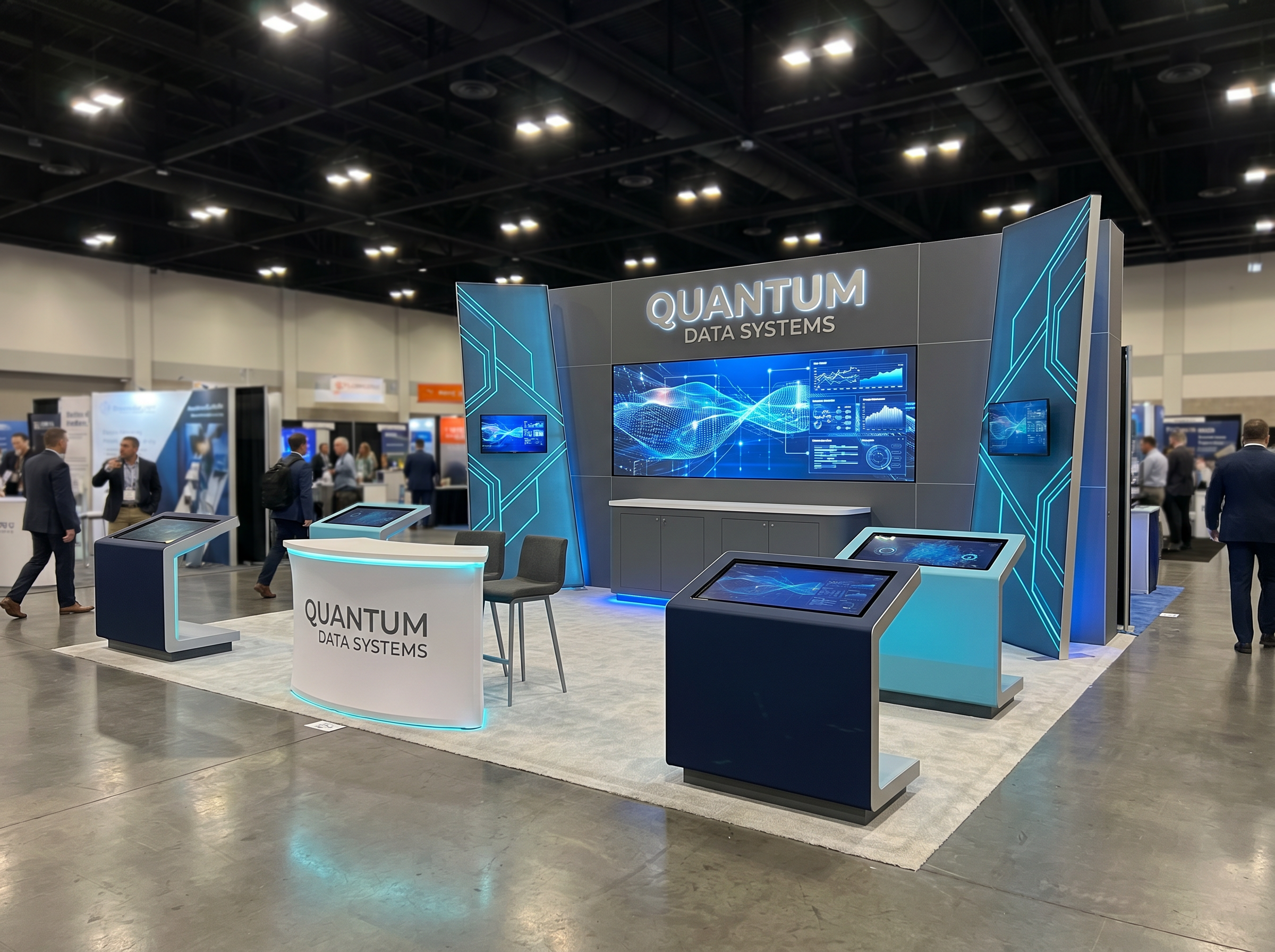
Curved LED Displays
Curved LED displays can create a stronger architectural read than a flat video wall, but they only work when the radius, content, and structure are engineered together.
Helpful next links
- In-house executionDesign, fabrication, graphics, install & dismantle managed by one team.
- Two operations hubsOrlando & Las Vegas facilities supporting national show calendars.
- Nationwide reachExhibit programs delivered across 20+ major U.S. markets.
- Direct quote line888-633-5197

What you get with this service
- Curved LED scope reviewed through radius geometry, content mapping, and structure
- Useful for brands that want a stronger architectural media read in larger footprints
- Planned to stay buildable, shippable, and commercially relevant on real show floors
A curved LED display changes both the visual language and the fabrication logic of an exhibit. The radius affects viewing angles, content continuity, structural support, and how the visitor perceives the environment from different aisle approaches. That can be valuable for brands that want a more wrapped media surface, a theater-like product moment, or a cleaner way to soften the geometry of a larger island exhibit. But curved LED also introduces more planning pressure because the system has to resolve around frame logic, processor coordination, content mapping, freight protection, and field assembly.
We evaluate curved LED displays by asking where the curve improves the exhibit's commercial job. In some programs, a curved wall gives the exhibit a more distinctive perimeter and helps guide attention toward a hero message. In others, the cost and complexity are not justified compared with a flat wall or a segmented modular approach. By tying the decision to audience approach, exhibit footprint, content behavior, and venue rules, we can show whether the curve is improving the experience or simply increasing scope without enough payoff.
Because curved media surfaces can complicate packing and install, they are best handled inside a disciplined modular workflow. Structure, tile layout, and content templates need to be planned together so the exhibit can still move through installation and dismantle predictably. That matters in major convention venues where labor timing is compressed and recovery windows are short. Our process keeps those practical realities visible so the exhibit is not sold as a dramatic rendering and then improvised on site.
This page is meant for exhibitors considering a more architectural LED move without losing control of budget and execution. A curved display can be highly effective, but only when the geometry serves the message, the exhibit, and the show-floor conditions at the same time.
Not sure yet?
Browse a few exhibits to picture it — then we will price it.
Already know your size? Jump straight to a quote. Still shaping the idea? Take a look at a few exhibits below, and we will help you land on the right one for your show and budget.
Why exhibitors hand this to us
Walk the aisle knowing your exhibit is handled.
Most exhibitors lose nights chasing three or four vendors who each blame the other when something slips. We put design, graphics, freight, install, dismantle, and storage under one team and one phone number — so you show up to a finished exhibit and spend the show selling, not firefighting.
More qualified conversations
An exhibit that pulls the right buyers in and gives your team room to close — the reason you booked the show in the first place.
One team, one accountable number
No vendor finger-pointing. Design, print, freight, and labor stay aligned so nothing falls through the cracks on the floor.
Hours back on your calendar
We handle the scope, the drawings, and the logistics. You approve and go — instead of project-managing five suppliers.
No show-floor surprises
Clear scope, clear pricing, and a crew that has run these venues before. What you approve is what stands on the floor.
Show dates do not move — freight and labor windows fill up. The earlier we lock your design and production slot, the more options you keep and the less you pay in rush fees. Start the conversation now while the calendar is still open.
FAQ
Curved LED Displays questions buyers ask before they request a quote
What is included in curved led displays?
Curved LED Displays is handled as part of a connected exhibit program that can include design coordination, engineering review, graphics, production planning, logistics, installation, dismantle, and quote support depending on the project scope.
Can curved led displays support custom and modular exhibit programs?
Yes. We use engineered modular aluminum systems when they fit the project, and we scale the service around the footprint, event objective, graphics load, and reuse plan instead of forcing one exhibit approach on every exhibitor.
How is pricing discussed for curved led displays?
We frame scope in practical engineering terms such as footprint, frame length, graphic coverage, LED count, crate count, labor hours, and timeline pressure so buyers can see what is driving cost and where the plan can be simplified if needed.
Do you support major convention markets with curved led displays?
Yes. The service pages are built for exhibitors showing in high-volume markets such as Orlando, Las Vegas, Chicago, Atlanta, Houston, Dallas, and New Orleans where venue rules, labor timing, and freight handling can materially affect the exhibit plan.
Can this service be combined with installation, dismantle, graphics, and storage?
Yes. The service model keeps design, fabrication, graphics, freight, installation, dismantle, and storage aligned under one team so the exhibit does not get split across disconnected vendors.
What is the best next step if I need curved led displays for an upcoming show?
Start with the quote form and share the event city, venue, show date, footprint, and the level of support you need. From there we can connect the service scope to the right exhibit size, custom direction, or event-specific planning page.