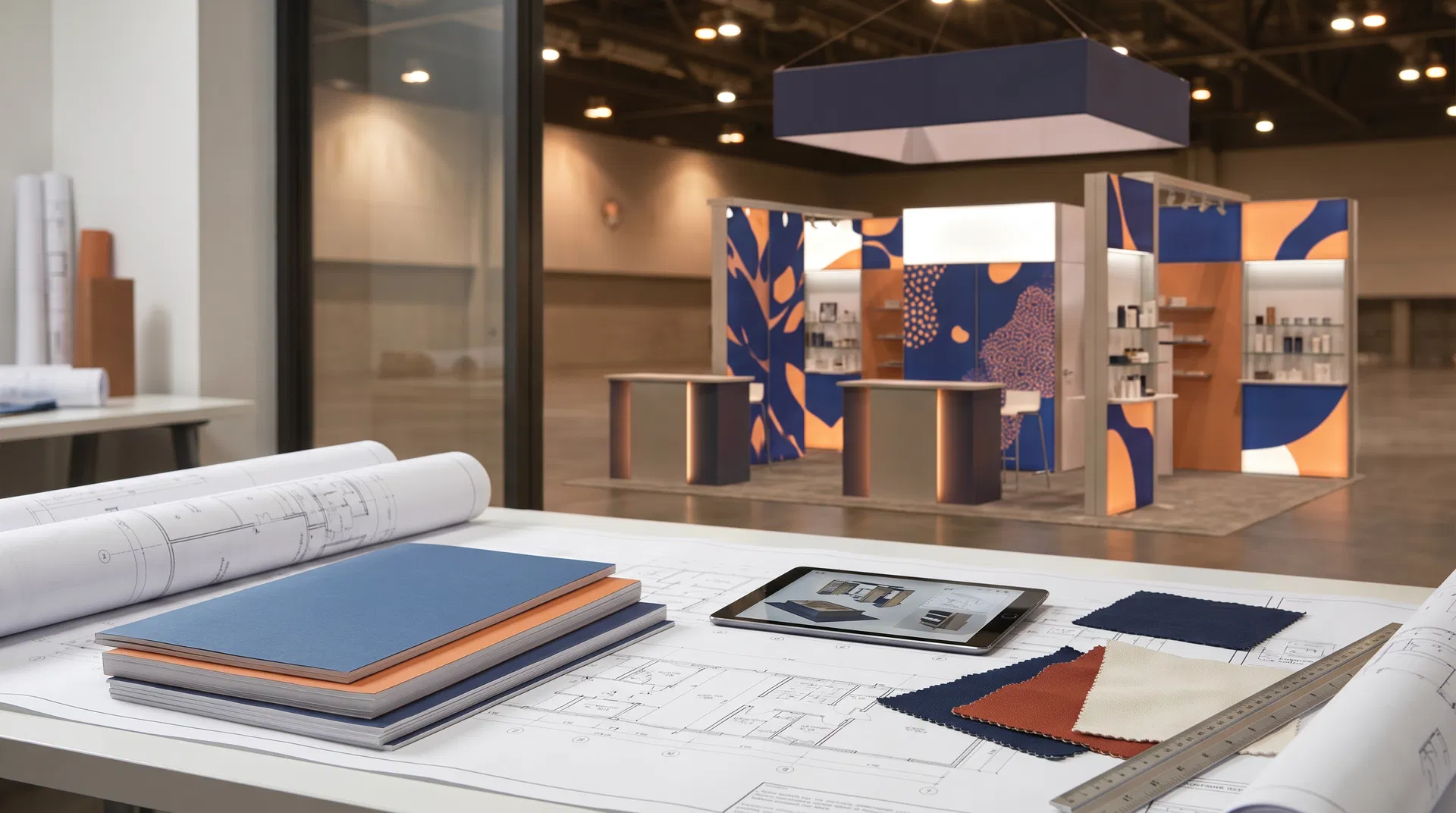
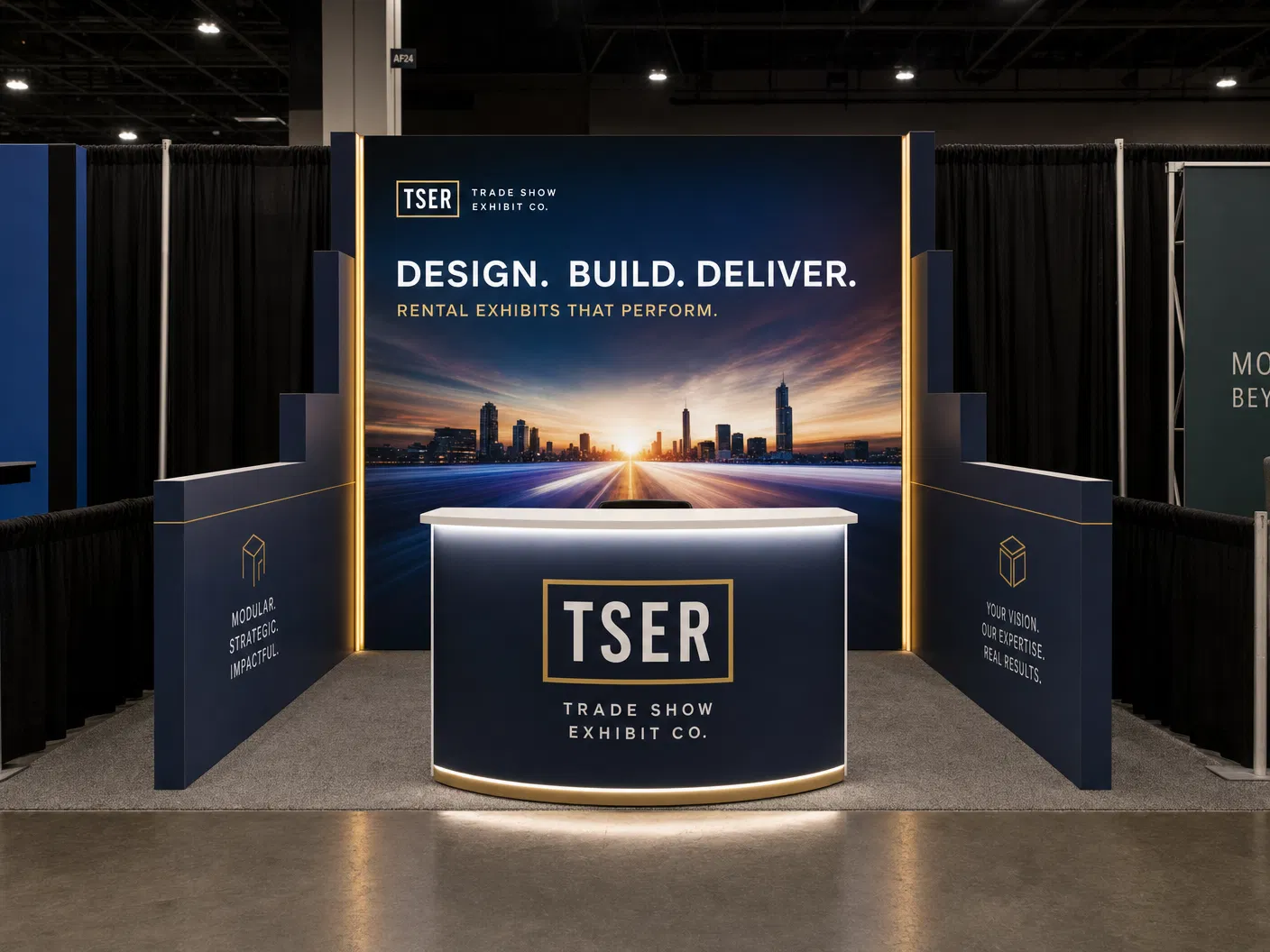
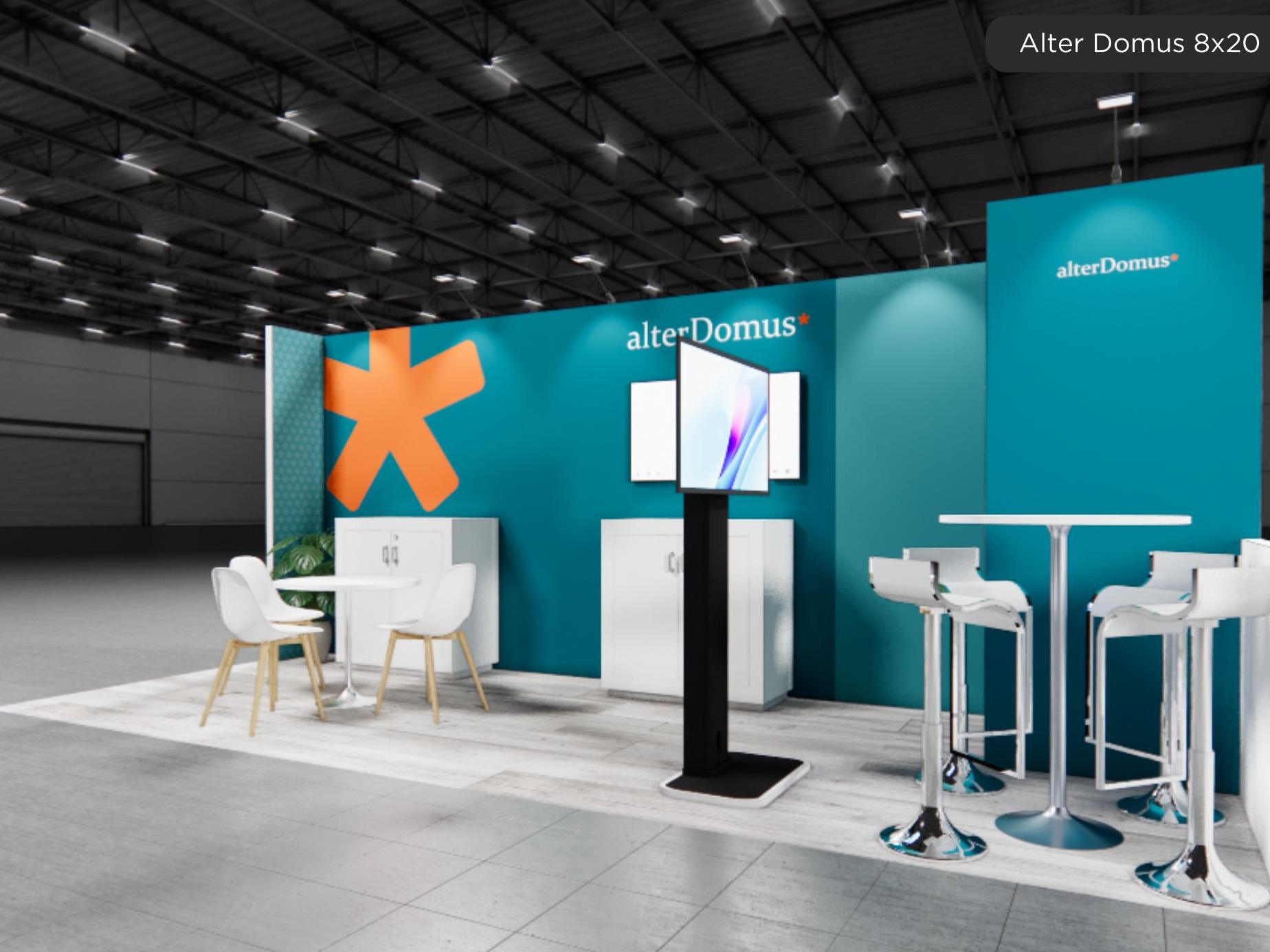
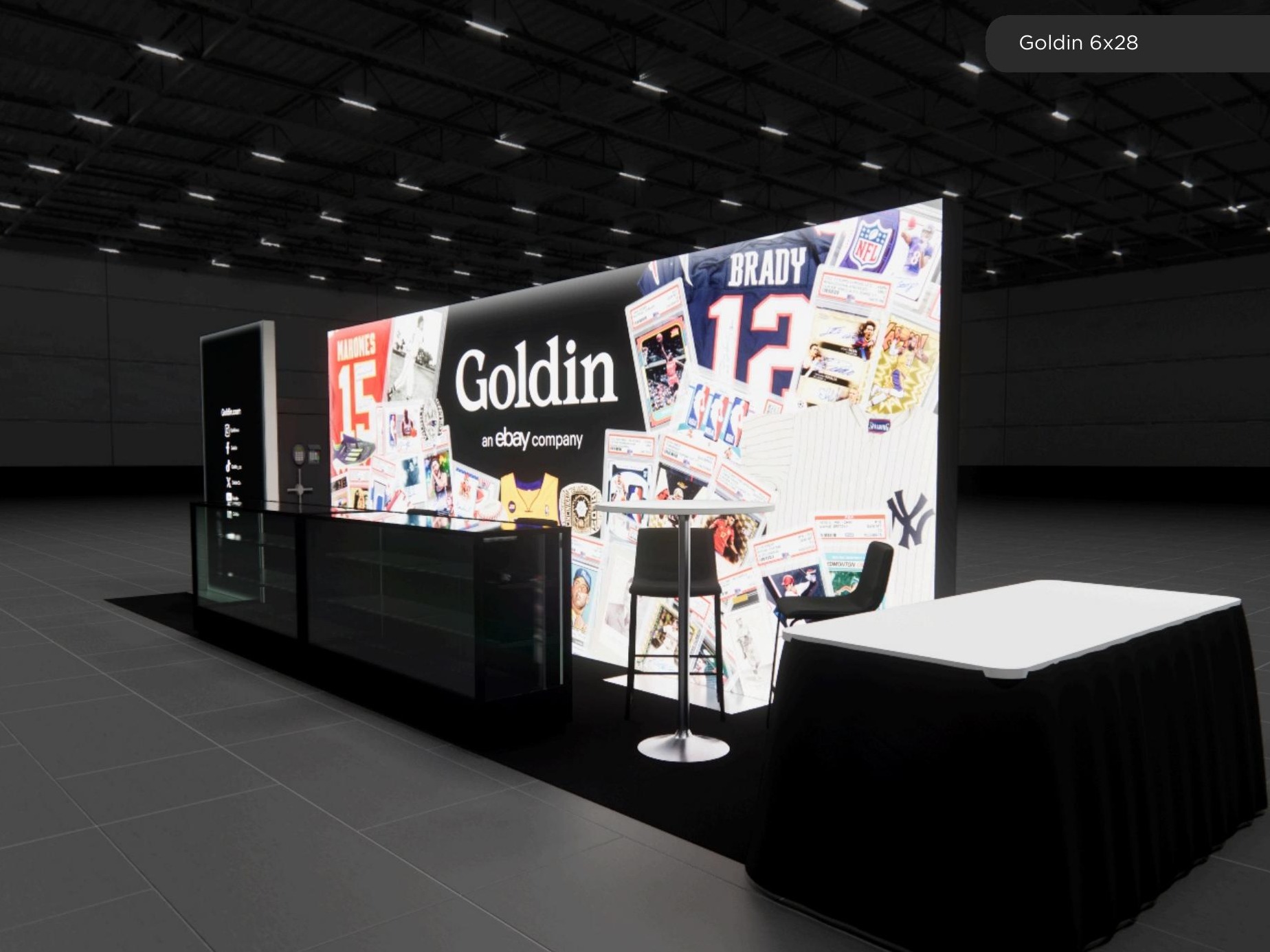
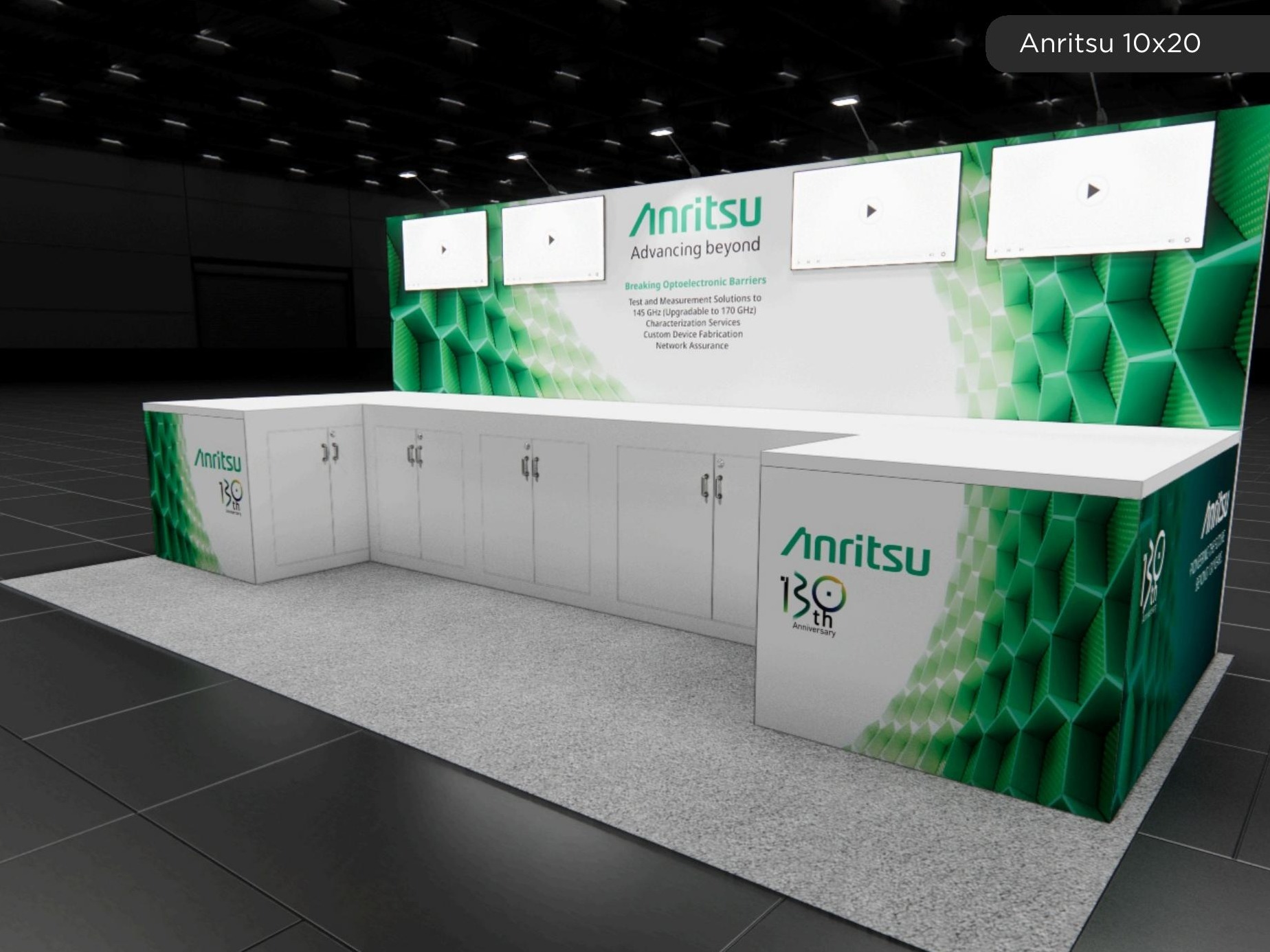

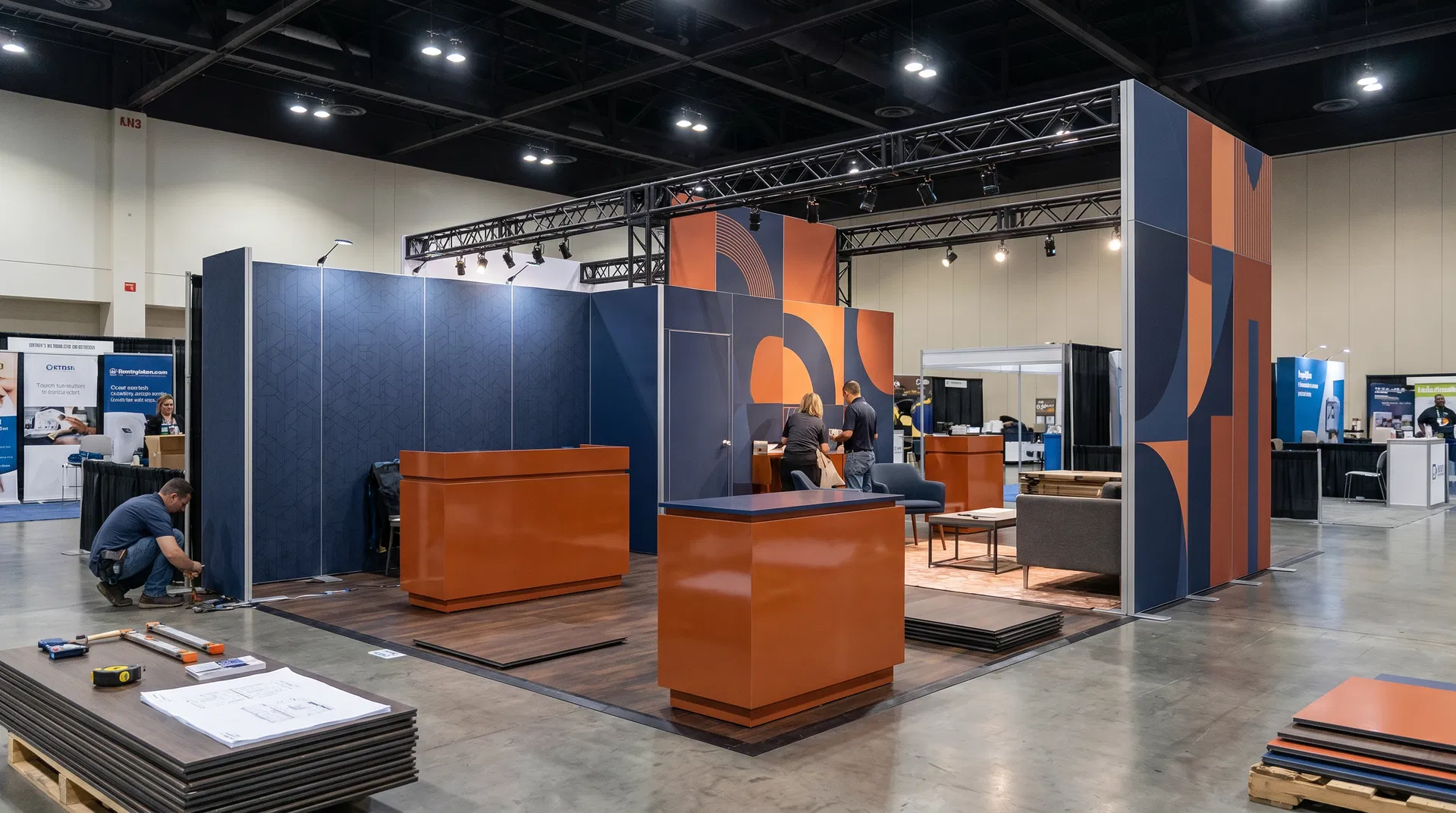
A well-planned trade show set featuring a modular structural backbone and integrated media surfaces. This cohesive design approach ensures all exhibit elements work together cleanly on the show floor.
- Trade show set planning influences far more than the look of the exhibit.
- The first question is how the full exhibit environment should be composed so architecture, counters, graphics, demos, and meeting zones read as one system.
- modular aluminum systems are helpful because they force more honest planning.
- The biggest planning risk is adding separate scenic elements one by one until the exhibit loses hierarchy, wayfinding, and visual discipline.
Why trade show set planning matters more than most exhibitors expect
Trade show set planning influences far more than the look of the exhibit. It affects staffing, timing, visitor flow, graphics, freight, and what the program actually costs to execute. Buyers usually run into trouble when they treat trade show set planning as a late-stage detail rather than an early planning decision. Once the show date gets close, mistakes around trade show set planning become expensive because every other discipline starts reacting to them at once.
This is especially true in high-volume markets such as Las Vegas, Orlando, Anaheim, and Houston. Those cities expose weak planning quickly. Labor windows tighten, move-in schedules get crowded, and small scope errors become real invoice problems. The more precisely the team defines trade show set planning early, the easier it becomes to align design, fabrication, graphics, logistics, and installation.
The core decisions buyers should make first
The first question is how the full exhibit environment should be composed so architecture, counters, graphics, demos, and meeting zones read as one system. That answer frames the rest of the planning conversation. A team that needs lead capture and quick product orientation will make different exhibit decisions than a team that needs long demos, hospitality, or private meetings. Once the objective is clear, the exhibit can be built around a real operating model instead of a collection of disconnected features.
The next move is to define what is mandatory versus optional. That distinction protects the budget. It also keeps the conversation grounded in engineering logic such as frame length, graphic coverage, LED tile count, crate count, and labor hours instead of drifting into vague statements about an exhibit looking more premium. Clear priorities almost always produce a stronger exhibit than a longer wish list.
How modular systems improve planning discipline
modular aluminum systems are helpful because they force more honest planning. The frame geometry is known, graphic panels can be scoped accurately, and media surfaces can be integrated without reinventing the structure each time. That does not limit creativity. It simply means the creative direction is tied to a realistic build method from the beginning.
For exhibitors trying to scale across multiple events, systems-first planning also supports reuse. A clean modular backbone makes it easier to reconfigure the environment for different venues or show objectives while preserving brand recognition. That flexibility becomes valuable when one calendar includes a small inline exhibit in Orlando, a larger island in Las Vegas, and another variation in Dallas or Houston.
Where exhibitors usually lose money or momentum
The biggest planning risk is adding separate scenic elements one by one until the exhibit loses hierarchy, wayfinding, and visual discipline. Once that starts happening, every downstream step gets harder. Graphics are revised late, fabrication choices become reactive, freight assumptions change, and the install plan becomes harder to defend. The result is not just overspend. It is a weaker experience on the show floor because the exhibit feels unresolved.
Another common issue is relying on pricing without checking the scope assumptions behind it. A quote that looks lower at first can become more expensive if the labor model is thin, graphics are excluded, or freight was underestimated. The safest way to evaluate any plan is to ask exactly what has been modeled and which variables are still open.
A practical way to improve trade show set planning before the next event
Teams usually make the most progress when they write a one-page exhibit brief covering the event, venue, footprint, staffing count, top product story, must-have functions, and approval budget. That brief turns trade show set planning from an abstract topic into a working project plan. It also gives the design and operations teams the same vocabulary instead of forcing them to interpret the assignment differently.
In 2026, the strongest programs are the ones that stay commercially realistic. They combine a clear objective, modular structural discipline, message clarity, and a logistics plan that can survive the venue. That is the standard buyers should use when they assess trade show set planning rather than choosing whatever sounds most impressive in a sales conversation.