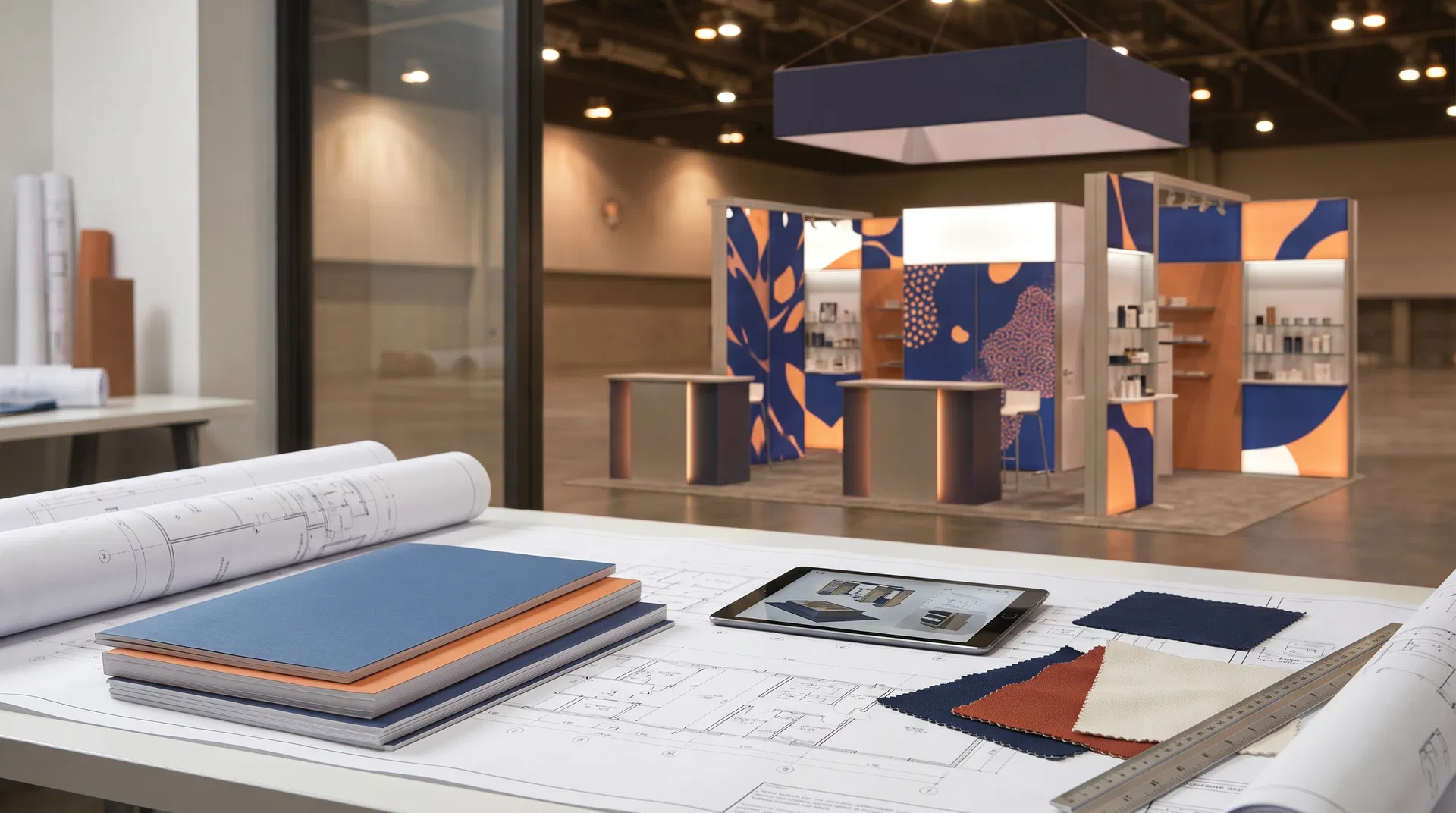
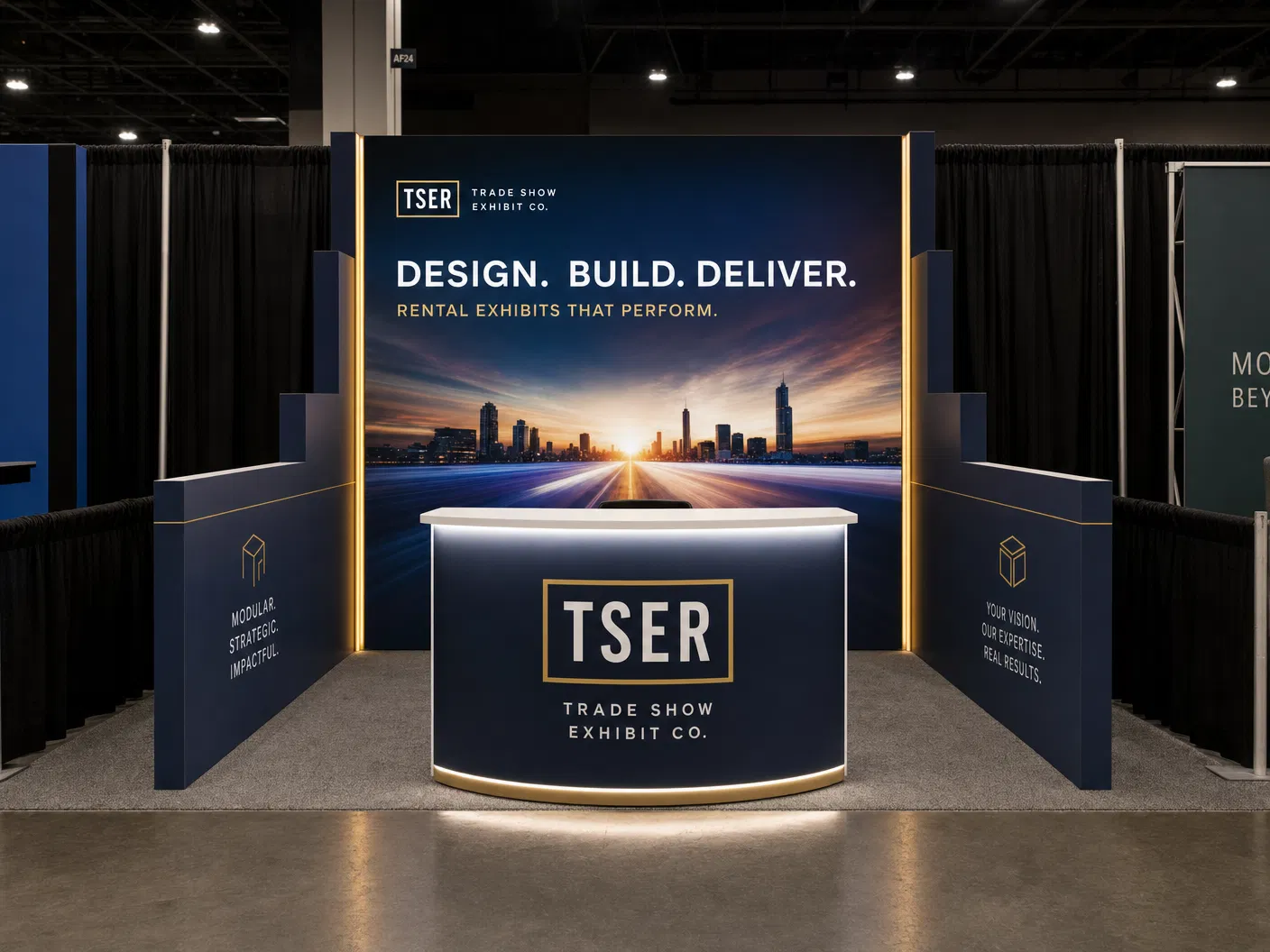
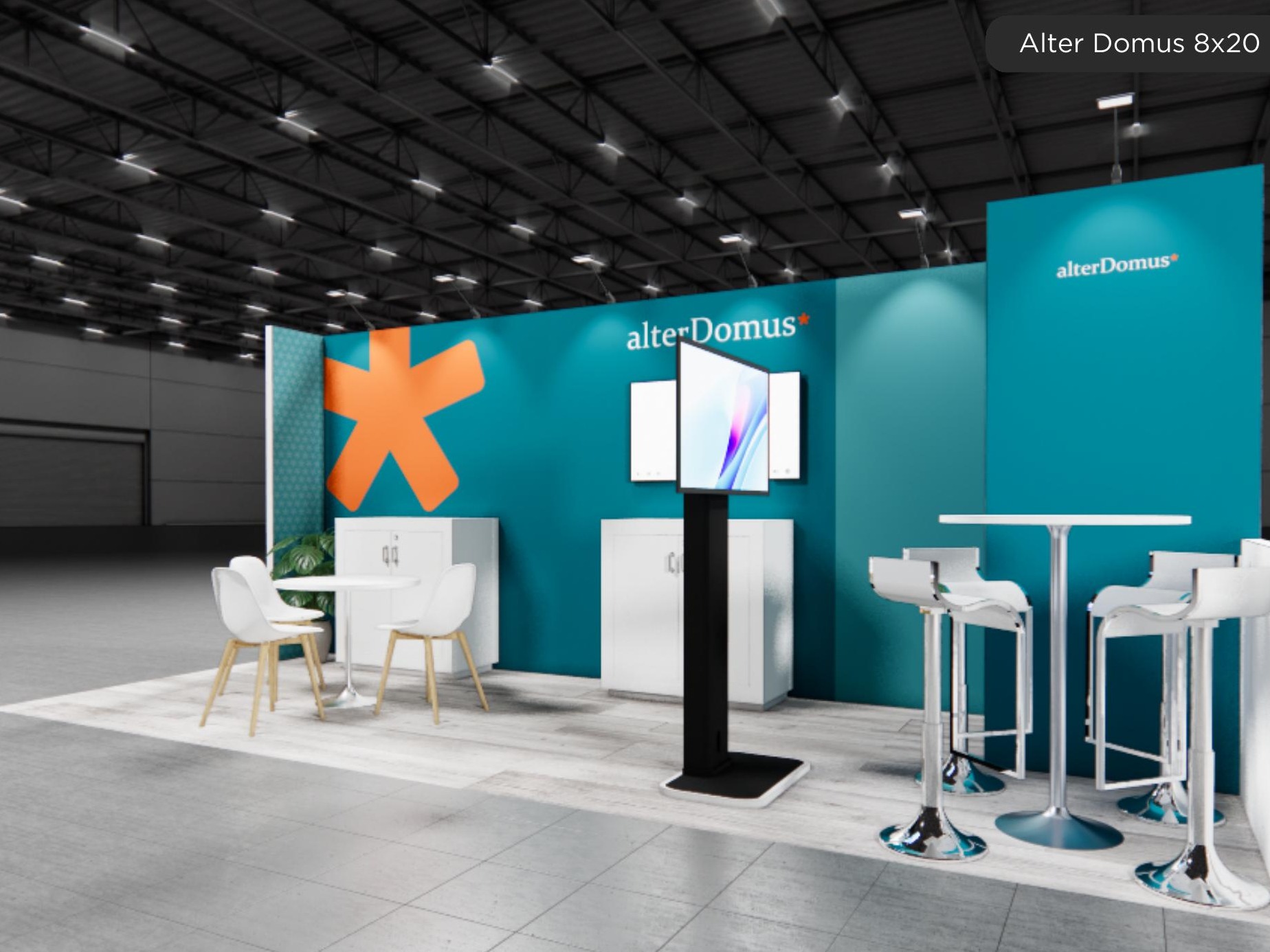
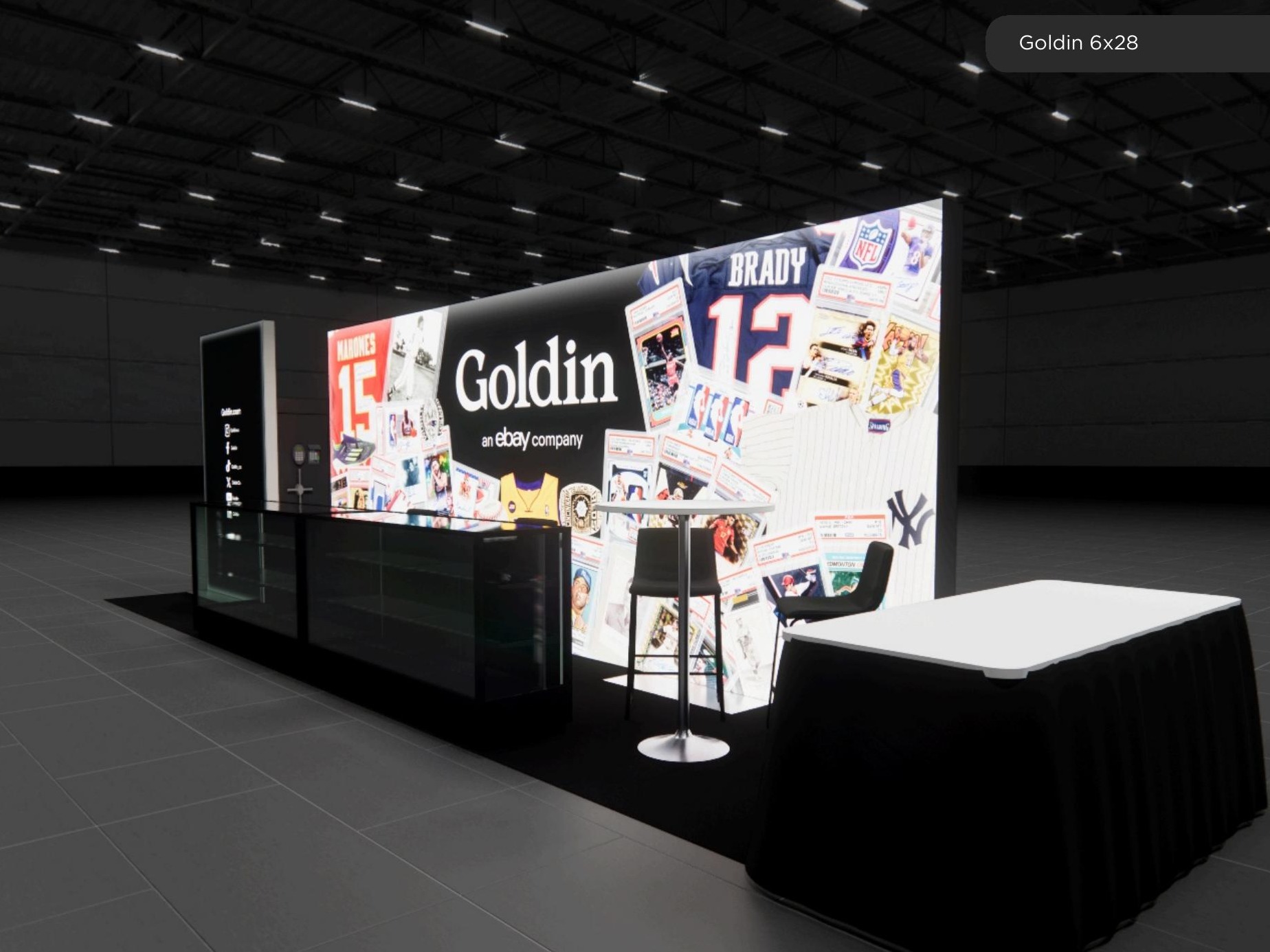
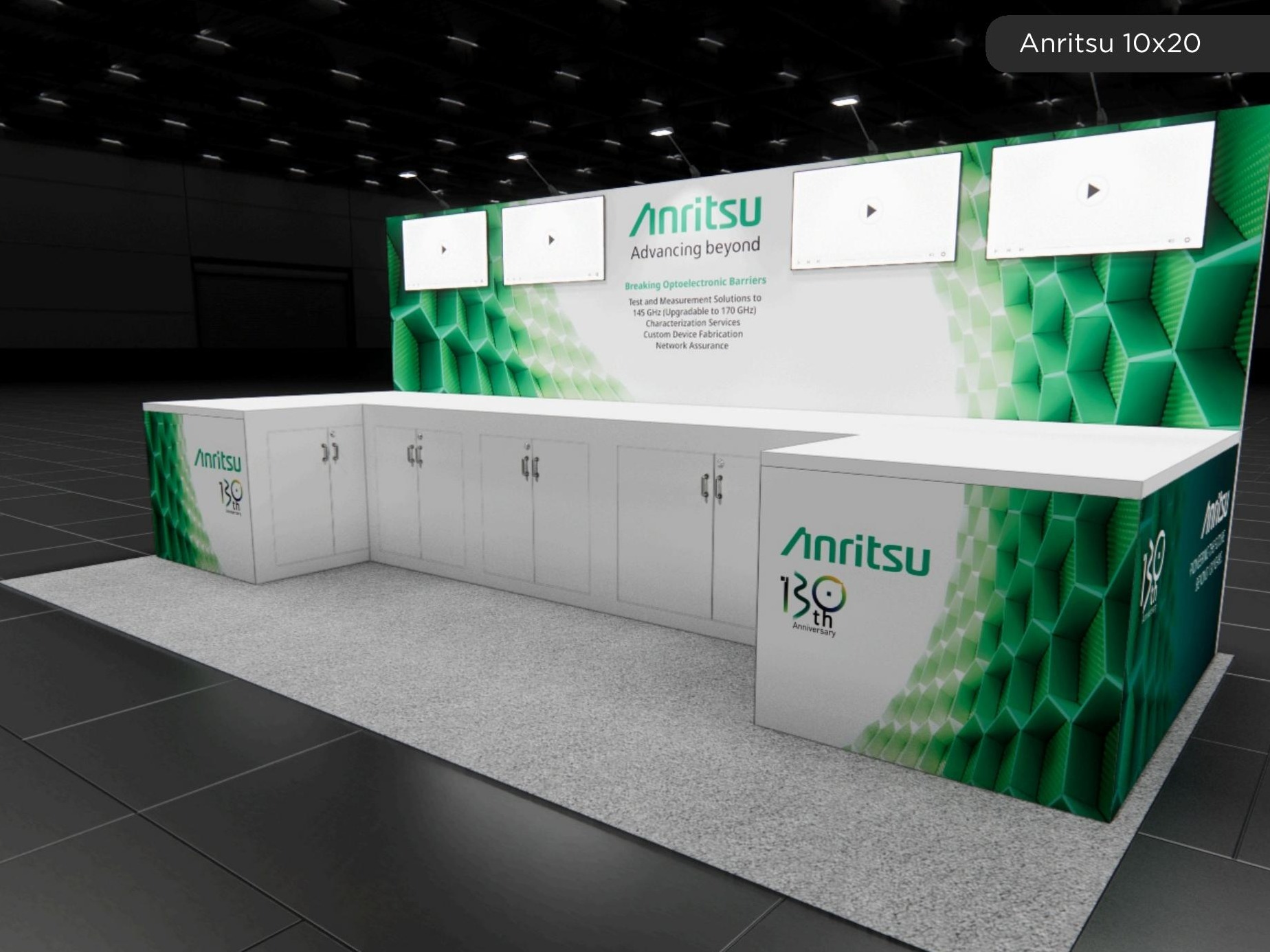
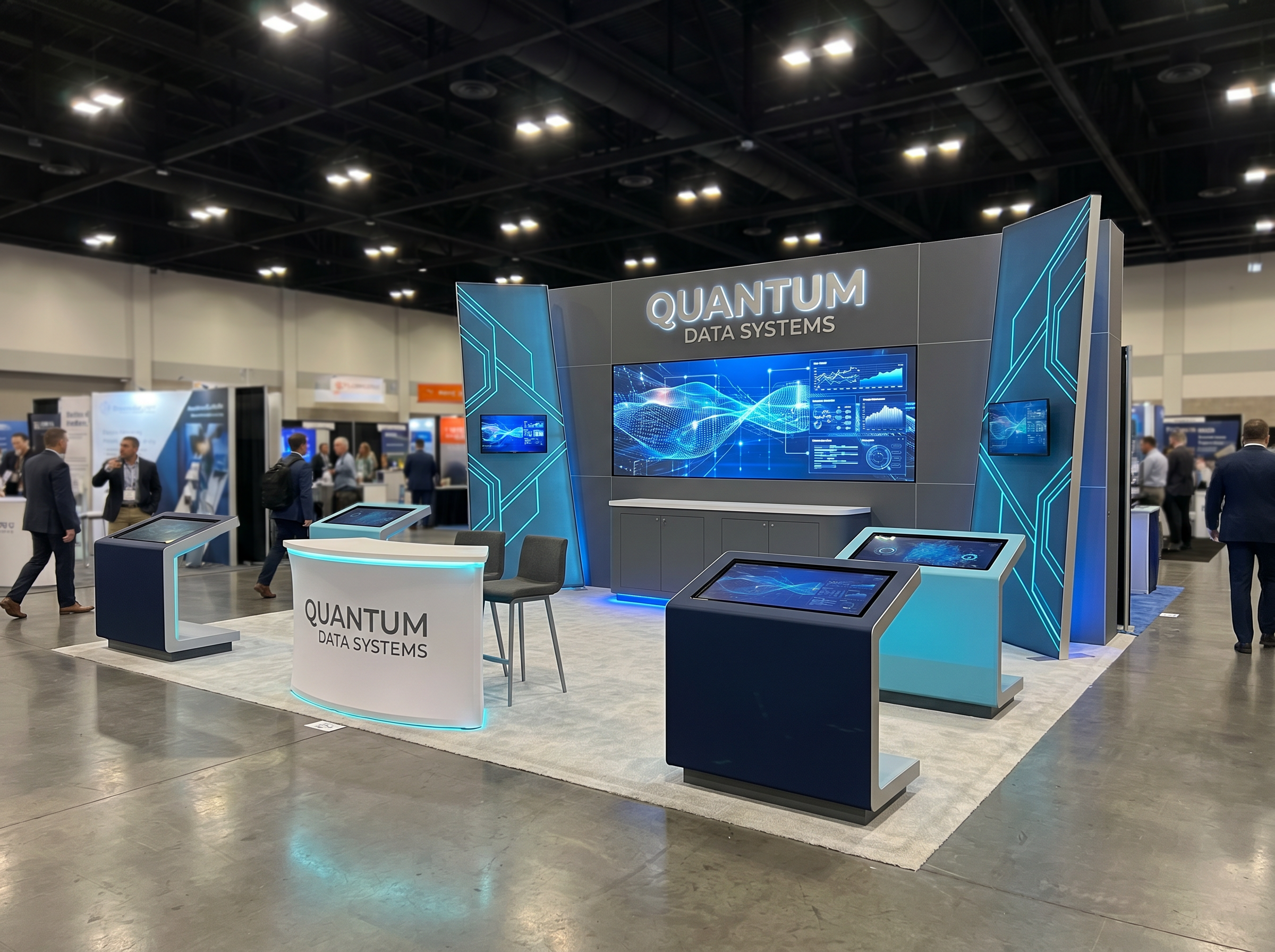

This image illustrates a modern trade show exhibit layout utilizing modular aluminum framing and LED video walls. It demonstrates how structural elements and digital displays can be integrated to optimize traffic flow and engagement on the show floor.
- Selecting the right exhibit configuration is the foundational step in any exhibit design strategy.
- Modern trade show design relies heavily on modular framing systems that offer both structural stability and aesthetic versatility.
- The incorporation of dynamic visual elements is critical for capturing attendee attention on a busy show floor.
- A successful exhibit design must facilitate intuitive traffic flow and encourage meaningful interactions.
Understanding Core Exhibit Configurations
Selecting the right exhibit configuration is the foundational step in any exhibit design strategy. The four primary layouts—inline, corner, peninsula, and island—each present unique structural requirements and traffic flow dynamics. Inline exhibits, typically 10x10 or 10x20, require efficient use of backwall space and clear line-of-sight management to stand out in crowded aisles. Corner exhibits offer dual-aisle exposure, demanding a design that captures attention from multiple approach angles without creating visual clutter.
Larger footprints like peninsula and island exhibits provide the flexibility to integrate advanced architectural elements. Peninsula exhibits, anchored at the end of a row, benefit from three-sided exposure and are ideal for incorporating semi-private meeting areas or substantial product displays. Island exhibits, open on all four sides, offer maximum design freedom. These spaces allow for complex overhead structures, centralized focal points, and multidirectional traffic flow, making them the preferred choice for high-impact brand presentations.
Integración de sistemas de estructura moderna
Modern trade show design relies heavily on modular framing systems that offer both structural stability and aesthetic versatility. Systems like anodized aluminum extrusion have revolutionized exhibit construction by providing lightweight, scalable frameworks that support a wide range of infill panels, from tension fabric to rigid graphics. These systems allow for rapid deployment and reconfiguration, ensuring that your exhibit can adapt to different show requirements without sacrificing structural integrity.
La integración de perfiles especializados, como el sistema de aluminio modular, permite la creación de geometrías complejas y presentaciones gráficas uniformes. Estos sistemas están diseñados para soportar cargas de peso significativas, permitiendo la instalación segura de equipos AV pesados y estructuras aéreas. Al aprovechar estas soluciones avanzadas de estructura, los expositores pueden lograr diseños personalizados con la eficiencia y rentabilidad de la construcción modular.
Maximizando el impacto visual con tecnología LED
The incorporation of dynamic visual elements is critical for capturing attendee attention on a busy show floor. LED video walls and similar integrated video technologies offer a smooth way to embed high-resolution digital content directly into the exhibit architecture. Unlike traditional monitors mounted on stands, these systems integrate flush with the framing, creating a clean, modern aesthetic that maximizes usable space.
Al implementar tecnología LED, es esencial considerar la distancia de visualización y la estrategia de contenido. Las pantallas de alto pitch de píxeles son ideales para interacciones de cerca, mientras que las pantallas más grandes y de menor resolución son efectivas para atraer tráfico desde el otro lado del salón. Además, los requisitos estructurales para soportar los paneles LED deben ser cuidadosamente diseñados, asegurando que el sistema de estructura pueda manejar de manera segura el peso adicional y las necesidades de distribución de energía.
Optimización del flujo de tráfico y de la interacción
A successful exhibit design must facilitate intuitive traffic flow and encourage meaningful interactions. The layout should guide attendees naturally through the space, with clear zones designated for product demonstrations, casual conversations, and formal meetings. Avoiding physical barriers at the perimeter and utilizing open sightlines can make the exhibit feel more inviting and accessible to passersby.
Los elementos interactivos, como pantallas táctiles, modelos de producto o experiencias de realidad aumentada, deben ubicarse estratégicamente para atraer a los asistentes hacia el interior del stand. Estos puntos de interacción deben contar con iluminación adecuada y señalización clara para que sean fáciles de encontrar. Al priorizar la experiencia del usuario en la fase de planificación espacial, los expositores pueden aumentar significativamente el tiempo de permanencia y el potencial de generación de contactos.